
Business Process Mapping Examples: Where Work Gets Stuck—and How to Fix It
Business Process Mapping Examples: Where Work Gets Stuck—and How to Fix It
Most business process mapping ends up with a pretty diagram and no real fixes. You think your workflow is clear—until the handoffs, approvals, and admin steps reveal hidden bottlenecks and risks. In this post, you’ll see business process mapping examples that expose where work stalls and how to turn those weak points into steady, repeatable systems that cut down owner dependency. For more insights, you can explore this guide to business process mapping.
Identifying Process Bottlenecks
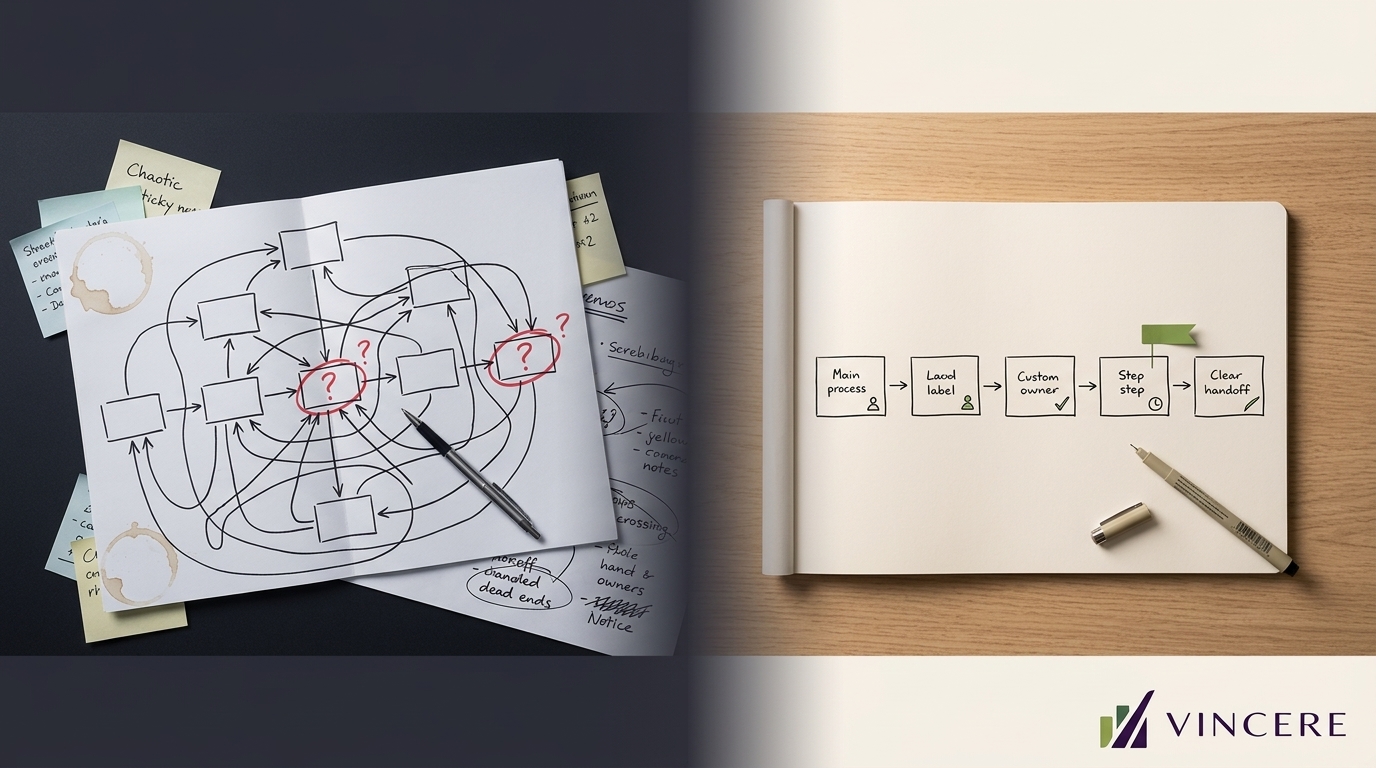
When you look at your operations, it's common to find areas where work slows down. Let's identify these bottlenecks and find ways to clear them.
Common Handoff Friction Points
Every business has moments when tasks move from one person to another. These handoffs can create confusion. Imagine your sales team closing a deal, but the details get lost when passed to the delivery team. This is where friction happens. To fix this, ensure clarity in responsibilities and streamline the handoff with clear instructions. Training and regular feedback loops can also help in reducing these friction points.
Approval Workflow Challenges
Approvals can slow things down, especially if they're not well-organized. Picture having a project that needs multiple approvals. If the chain is unclear, you may face delays. To solve this, establish a clear approval process. Use tools that automate notifications and keep everyone informed about pending tasks. This way, you reduce the chances of bottlenecks due to unclear approval paths.
Recognizing Owner Dependency
Owners often find themselves involved in too many decisions, which can be a bottleneck. If your team relies on you for every step, progress stalls. Start delegating responsibilities and trust your team with decision-making. Creating guidelines and frameworks can empower them to act independently, freeing you to focus on bigger strategic goals.
Workflow Mapping Solutions
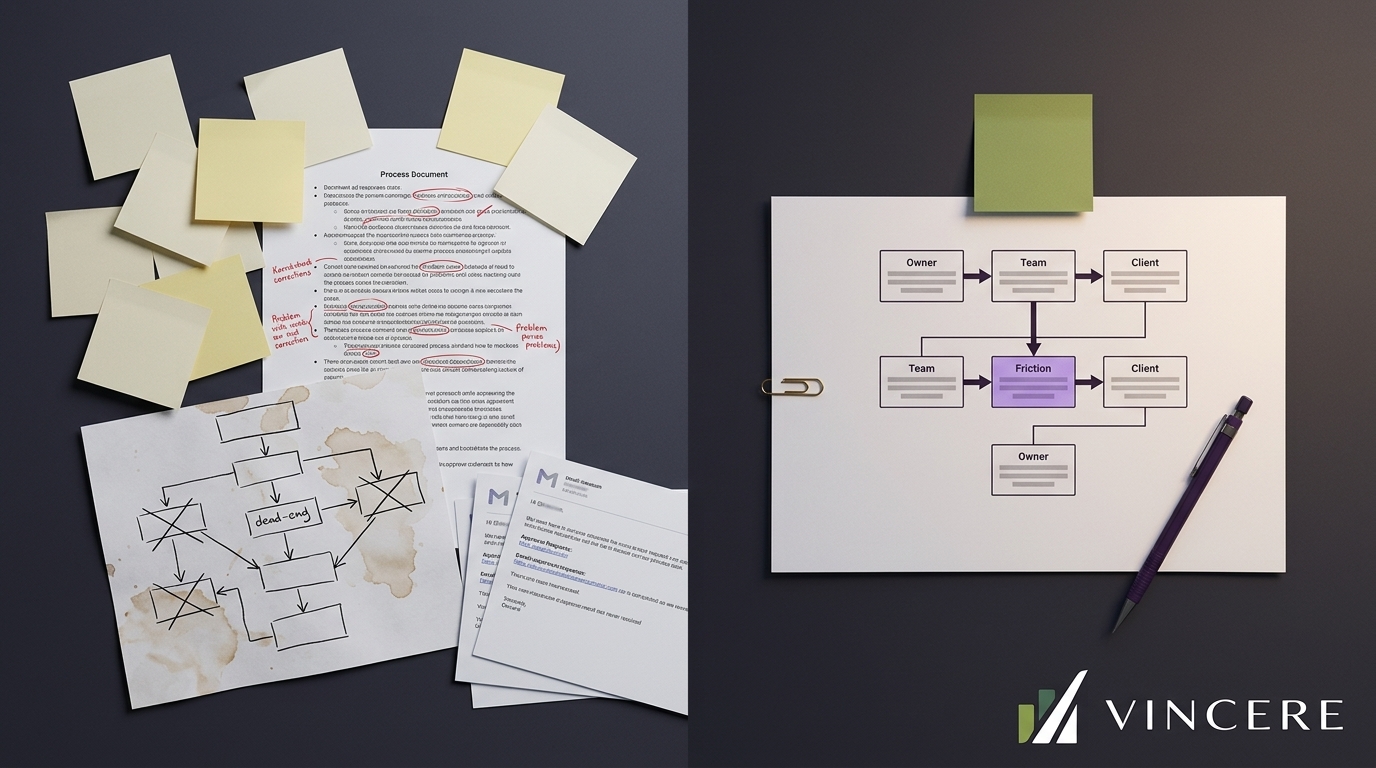
Once you've spotted the bottlenecks, it's crucial to map your workflow for clarity. Let's explore how mapping can transform your processes.
Process Mapping Before and After
Imagine mapping your current workflow and spotting inefficiencies. By visualizing steps, you see where work stalls. For example, a client onboarding process might initially take days due to back-and-forth emails. After mapping, you might streamline it to hours by automating initial data collection. Mapping gives you a clear view of what's working and what needs adjustment. Check out our article on Process Mapping Software as a Decision Tool for more insights.
Crafting Effective Swimlane Diagrams
Swimlane diagrams are a great tool for clarity. They lay out processes visually, showing each team's role. Take an example of a marketing campaign. You can see how tasks move across departments, from planning to execution. This diagram not only helps in identifying overlaps but also ensures everyone knows their part in the process. By using swimlane diagrams, you foster transparency and accountability.
Standard Operating Procedures and Playbooks
Having a playbook or SOP ensures consistency. With SOPs, you document every step in a process. For instance, a catering business might have an SOP for event setup, detailing every action from equipment checks to final presentation. This documentation helps new employees get up to speed quickly and ensures tasks are performed the same way every time, reducing errors.
Enhancing Operational Efficiency

With your workflows mapped and SOPs in place, let's focus on boosting efficiency.
Assigning Clear Process Ownership
Assigning ownership is key. When tasks have clear owners, accountability rises. Consider a product launch: if everyone knows their role, there's less confusion. Regularly review and update these roles to ensure they align with your team's strengths and business goals. This clarity in ownership helps keep the process smooth and on track.
Risk Mitigation Strategies
Identifying potential risks before they occur can save time and resources. Develop a risk management plan by brainstorming possible issues in your processes. For instance, think about what could go wrong in your supply chain and create contingency plans. This proactive approach helps maintain continuity and minimizes disruptions.
Capacity Planning for Q3 and Beyond
Planning for future capacity is essential for growth. Evaluate your current resources and anticipate future demands. If you're expecting a busy Q3, assess if your team can handle the load. Use these insights to make informed decisions about hiring or reallocating resources, ensuring you're ready to meet new challenges head-on.
Frequently Asked Questions
What is business process mapping?
Business process mapping is the visual representation of a series of tasks that shows how work gets done. It helps identify bottlenecks and streamline processes.
How can swimlane diagrams improve workflow?
Swimlane diagrams improve workflow by visually separating tasks across different teams or departments, ensuring clarity and accountability in process execution.
Why are SOPs important for businesses?
SOPs provide a documented guide for performing tasks consistently, reducing errors, and ensuring that all team members follow the same process.