
Before You Download Microsoft Visio: Map the Process That Frees You From Daily Ops
Before You Download Microsoft Visio: Map the Process That Frees You From Daily Ops
Most business owners think a Microsoft Visio download is the quick fix for messy workflows. But grabbing a drawing tool won’t show you the hidden handoffs, approvals, and repetitive tasks that keep you tied to daily operations. What you really need is a workflow map that exposes these bottlenecks and owner dependencies, so you can build a system your team runs without constant input from you. Let’s explore why mapping your process first is the smarter move. Learn more about process mapping tools.
Rethink the Microsoft Visio Download

Grabbing a download of Microsoft Visio may seem like the quick fix to untangle messy workflows, but the real power lies in a well-mapped process.
Process Mapping vs. Tool Dependency
Let's start with a simple truth: tools like Visio are just that, tools. They can't replace a thoughtful workflow map. You need a clear view of how tasks flow, where they get stuck, and who holds up progress. This kind of process mapping is the real game-changer. It highlights bottlenecks and shows where owner involvement keeps your business from running smoothly.
Instead of relying on a drawing tool, you should focus on mapping your processes. This helps identify unnecessary steps and delays, providing a roadmap for more efficient operations. With this clarity, you can see precisely where changes will have the most impact.
For example, consider a customer approval process that takes too long. By mapping it out, you might find redundant steps or unnecessary approvals that slow everything down. Removing or streamlining these steps can save time and reduce frustration.
The Real Value of Workflow Maps
Workflow maps are not just visual aids; they are strategic tools that can transform your business operations. They provide insights you won't get from any software alone. You gain a clear understanding of each process, allowing you to make informed decisions that drive improvement.
By creating a detailed workflow map, you lay the groundwork for effective system design. This map should expose where tasks pile up, where approvals are delayed, and where ownership is unclear.
With this information, you can restructure processes to run more smoothly. Your map becomes a guide that leads you to operational efficiency. It shows you where to focus your efforts for maximum impact, moving from chaos to clarity.
Business Process Improvement Insights
Improving your business processes starts with identifying areas for growth. Workflow maps provide the insights needed to make these improvements. They highlight inefficiencies and allow you to address them directly.
When you map out your processes, you see the full picture. You can pinpoint which steps are necessary and which ones create bottlenecks. This clarity is crucial for effective business process improvement.
By addressing these pain points, you free up time and resources. Your team can work more effectively, and your business can scale without the added stress. This is the ultimate goal of process mapping: to create a streamlined operation that enhances your overall efficiency.
From Workflow Maps to Operational Clarity
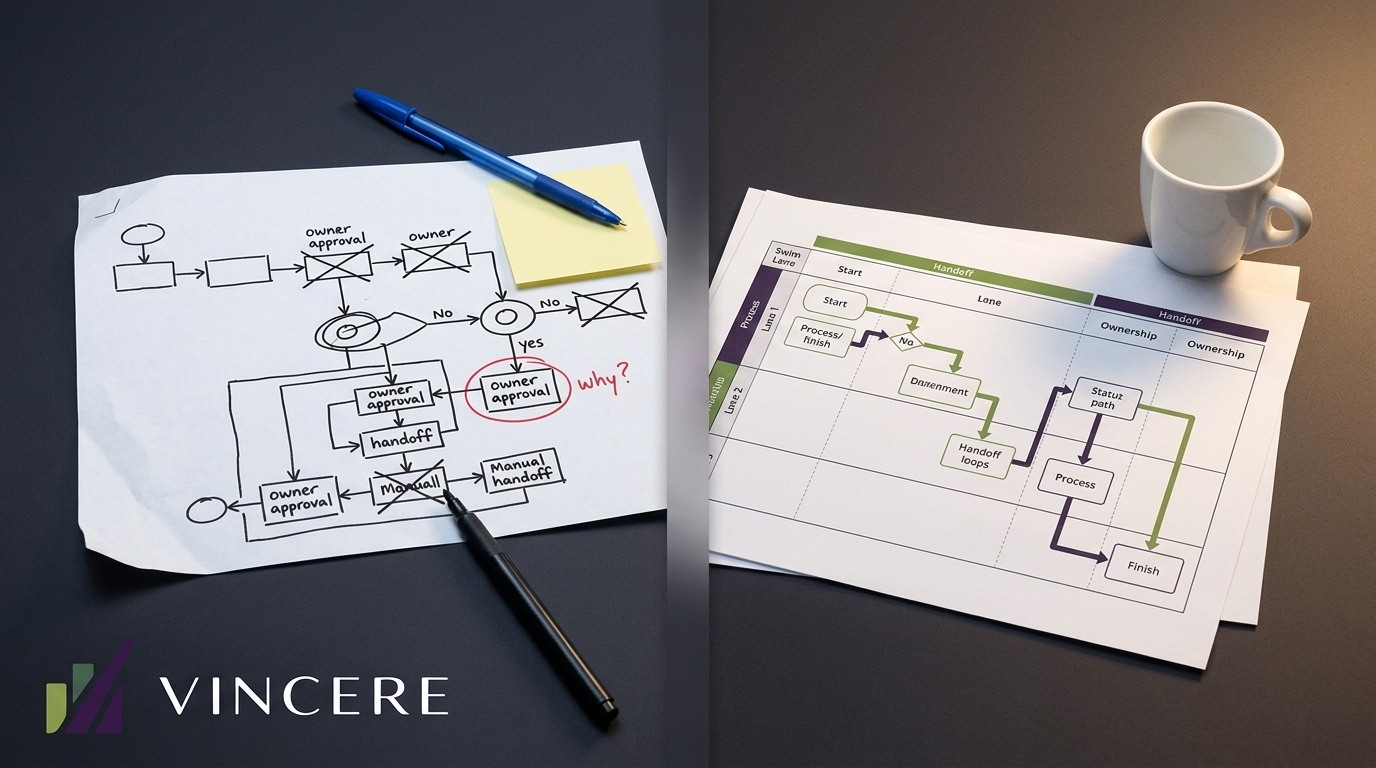
Using workflow maps effectively leads to operational clarity. This clarity is essential for running your business smoothly and efficiently.
Identifying Process Bottlenecks and Risks
One of the most significant benefits of workflow maps is their ability to reveal process bottlenecks and risks. These maps provide a clear view of where tasks slow down, enabling you to take action before small issues become major problems.
Consider a situation where multiple approvals are needed for a single task. This can cause significant delays if not managed properly. By identifying these points, you can streamline approvals, reducing wait times and improving overall workflow.
Moreover, workflow maps help you identify potential risks. By understanding where processes are vulnerable, you can implement safeguards to protect your operations. This proactive approach reduces the likelihood of costly mistakes or compliance issues.
Reducing Owner Dependency through System Design
Reducing owner dependency is critical for scaling your business. With a well-designed system, you can ensure that operations run smoothly without constant oversight.
Workflow maps play a vital role in this process. They allow you to identify tasks that require your input and find ways to transfer these responsibilities to your team. This empowers your employees and frees up your time for strategic planning.
By designing systems that operate independently, you create a more resilient business. Your team can handle day-to-day operations, allowing you to focus on growth and long-term success.
Handoffs and Approvals: The Hidden Time Traps
Handoffs and approvals are often hidden time traps in business processes. They can seem insignificant but add up over time, leading to delays and inefficiencies.
Mapping out these steps allows you to see where improvements are needed. You can streamline handoffs to ensure tasks move smoothly from one person to the next.
Similarly, approvals can be optimized to reduce wait times. By setting clear criteria and delegating authority, you can speed up decision-making without sacrificing quality. This approach minimizes frustration and keeps your operations running efficiently.
Achieving Freedom with System Clarity

Creating clarity in your systems provides the freedom to focus on what truly matters.
Turning Process Maps into Actionable Systems
The goal of creating a workflow map is to turn it into an actionable system. This means taking the insights from your map and applying them to your operations.
By doing so, you create a repeatable process that eliminates confusion and reduces errors. Your team can follow clear guidelines, ensuring consistent outcomes regardless of who is involved.
This transformation from map to system is where the real value lies. It allows you to step back, knowing your business is running smoothly without your constant input.
Benefits of Workflow Automation and SOPs
Workflow automation and standard operating procedures (SOPs) are crucial tools in achieving operational efficiency. They help streamline tasks and reduce the need for manual intervention.
By automating repetitive tasks, you free up your team to focus on more strategic activities. This improves productivity and allows your business to grow without additional resources.
SOPs provide a clear framework for your team to follow. They ensure consistency and quality, regardless of who performs the task. This reliability is essential for maintaining high standards and meeting customer expectations.
Book Your System Clarity Session Today
Ready to transform your business operations? Book a System Clarity Session today and turn your process map into a team-run system. Discover how Vincere Consulting can help you reduce owner dependency and improve operational efficiency. Don't wait—the sooner you start, the sooner you can enjoy the benefits of a streamlined operation.
Frequently Asked Questions
What is a workflow map?
A workflow map is a visual representation of business processes, showing how tasks progress from start to finish. It helps identify inefficiencies and streamline operations.
How can process mapping improve my business?
Process mapping reveals bottlenecks and inefficiencies, allowing you to streamline workflows and improve efficiency. This leads to better resource management and a more effective operation.
Why is owner dependency a problem?
Owner dependency can hinder growth and create bottlenecks. By reducing reliance on owners for everyday operations, businesses can scale more effectively and focus on strategic initiatives.
What are handoffs and approvals in a workflow?
Handoffs occur when tasks move from one person to another, while approvals are checkpoints where tasks need authorization to proceed. Both can create delays if not managed efficiently.
How does workflow automation benefit my business?
Automation reduces manual effort, improves accuracy, and allows your team to focus on strategic tasks. This increases productivity and supports business growth.